Floral Line Art Silhouette Review for Real Embroidery
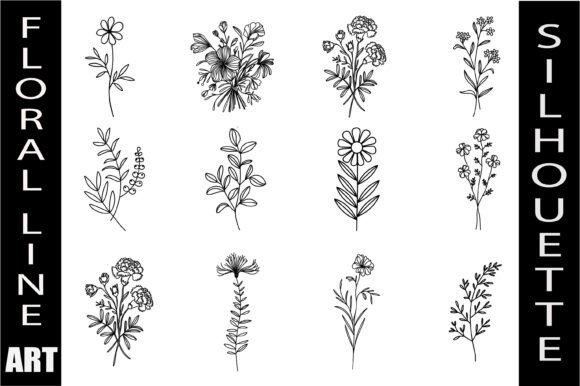
When I first opened the folder for Floral Line Art Silhouette, I wasn't looking for a complex floral arrangement or a dense, colorful bouquet. As someone who spends hours troubleshooting thread breaks and adjusting tension on custom apparel, I was hunting for something clean, versatile, and ready to integrate into a busy production workflow. This design immediately caught my eye because it strips away the clutter. It is a masterclass in minimalism, featuring delicate lines that suggest blossoms, cornflowers, roses, and spring nature without overwhelming the fabric.
The mood it creates is one of quiet sophistication. Unlike heavy fill stitches that can distort lightweight materials, this silhouette relies on the elegance of negative space. It feels like a sketch brought to life, perfect for the modern crafter who wants their finished product to look intentional rather than just "stitched." Whether you are an Etsy seller looking to boost your boutique branding or a hobbyist making personalized gifts, this file offers a level of visual clarity that often gets lost in more ornate designs.
From Digital File to Finished Product: A Real-World Scenario
To truly understand how Floral Line Art Silhouette performs, I need to walk through a specific project. Let's say I am preparing a batch of custom embroidered tote bags for a local artisan market. These bags will be made of sturdy canvas, but they need to appeal to a younger demographic that prefers subtle aesthetics over loud graphics. The client wants a design that looks good whether the bag is folded in a display bin or hanging on a rack.
I loaded the Floral Line Art Silhouette vector set into my digitizing software. Because the design comes in SVG, PDF, JPEG, and PNG transparent formats, I had immediate flexibility. For the embroidery machine, I utilized the SVG to ensure crisp edges. The challenge with line art on canvas is ensuring the stitches don't sink too deep into the weave or become invisible against the texture. By using a satin stitch for the outer contours and a light running stitch for the inner details, the design popped beautifully.
The result was a sophisticated logo that didn't compete with the text I added later. Customers at the craft fair loved it because it felt high-end. It looked like a premium boutique item rather than a generic souvenir. This is where the practical value of Floral Line Art Silhouette shines; it elevates the perceived value of the handmade product. When a buyer sees a clean, precise line drawing, they assume higher quality craftsmanship, even if the stitching technique is relatively simple.
Where This Design Fits Best in Your Workflow
This design is not a one-size-fits-all solution, but it excels in specific categories of Crafts and Graphics. If you are dealing with custom apparel like sweatshirts or t-shirts, this silhouette works wonders as a chest logo or a small back detail. The lack of heavy density means it won't create a stiff, uncomfortable patch on the shoulder of a hoodie.
For baby embroidery, such as onesies or burp cloths, the soft lines are gentle on the eyes and the fabric. Babies' clothes require frequent washing, and designs with fewer threads tend to hold up better against agitation. I also tested this on kitchen towels and aprons. The botanical theme fits perfectly in a farmhouse-style kitchen setting. Imagine a set of matching tea towels featuring different flowers from this set—Blossom, Cornflower, Rose—all unified by the same clean line style. It creates a cohesive collection that drives sales for small shop products.
It is also an excellent candidate for embroidered patches. Because the outline is distinct, you can easily add a backing and trim it cleanly for application on denim jackets or caps. However, applying this to a curved surface like a baseball cap requires careful attention to the hoop size and stabilizer choice to prevent puckering.
Design Limitations and Strategic Placement
While Floral Line Art Silhouette is impressive, no single design is perfect for every situation. There are areas where you must exercise caution. If you are working with a small hoop size, you need to verify the dimensions of the SVG before sending it to the machine. Very fine lines can sometimes disappear if the stitch length is too long relative to the design scale. Always test the design on scrap fabric first to see if the detail holds up.
Fabric texture plays a massive role here. On highly textured fabrics like bouclé or thick fleece, the delicate lines might get lost in the weave. Similarly, on stretchy fabrics like jersey knit, the stability of the line art depends entirely on the quality of your stabilizer. Without proper backing, the tension required to pull the thread tight enough to show the line could cause the fabric to pucker or warp around the flower shapes.
Dense stitch areas are generally avoided in this design, which is a plus, but it also means it lacks the boldness needed for high-visibility workwear. If you are designing for commercial embroidery on dark uniforms, you may find the thin lines difficult to read unless you use a contrasting underlay or a heavier thread weight. Also, be mindful of layered garments; placing a delicate design over a pocket or seam can lead to uneven stitching.
Practical Notes for the Embroidery Designer
Before you commit to a large run of personalized gifts or holiday embroidery projects, there are several technical steps you should take. First, inspect the small details in the vector file. Ensure that the corners of the petals and leaves are closed properly so the machine doesn't skip stitches.
Thread color contrast is critical for line art. A black outline on a white background is classic, but try experimenting with metallic threads or variegated spools to add depth. Since this is a digital embroidery file, you have the freedom to adjust the scale easily. Try resizing the design to 50% and then 150% to see how the stitch density changes. Sometimes, a smaller version loses its charm, while a larger version becomes too sparse.
If you plan to sell finished items made with this design, confirm the licensing terms immediately. Does the purchase allow for commercial use? Can you sell the physical products, or only the digital assets? Many creators make the mistake of assuming all files are royalty-free for resale. Check the documentation provided with the Graphics package to avoid legal issues down the road.
Another vital step is creating printable mockups. Before you even thread the machine, place the Floral Line Art Silhouette onto a photo of your actual product. Does it look balanced on the tote bag? Is it too large for the baby hat? Visualizing the final product helps you catch errors early. Compare light and dark fabric backgrounds in your mockup software to ensure the design remains legible across different variations.
Final Thoughts on Visual Appeal and Brand Consistency
In the world of Etsy sellers and creative entrepreneurs, consistency is key. Using a design like Floral Line Art Silhouette allows you to build a recognizable brand identity. The clean, linear aesthetic suggests professionalism and attention to detail. When customers receive a finished product that features such a refined design, their trust in your brand grows.
This design proves that you don't always need thousands of stitches to make an impact. Sometimes, the most powerful statement is the one made with a single, confident line. Whether you are decorating a pillow cover for a wedding gift or adding a touch of spring to a winter coat, Floral Line Art Silhouette offers a flexible, elegant solution that respects both the fabric and the viewer. Just remember to test, stabilize, and choose your colors wisely, and you will have a standout addition to your craft business inventory.